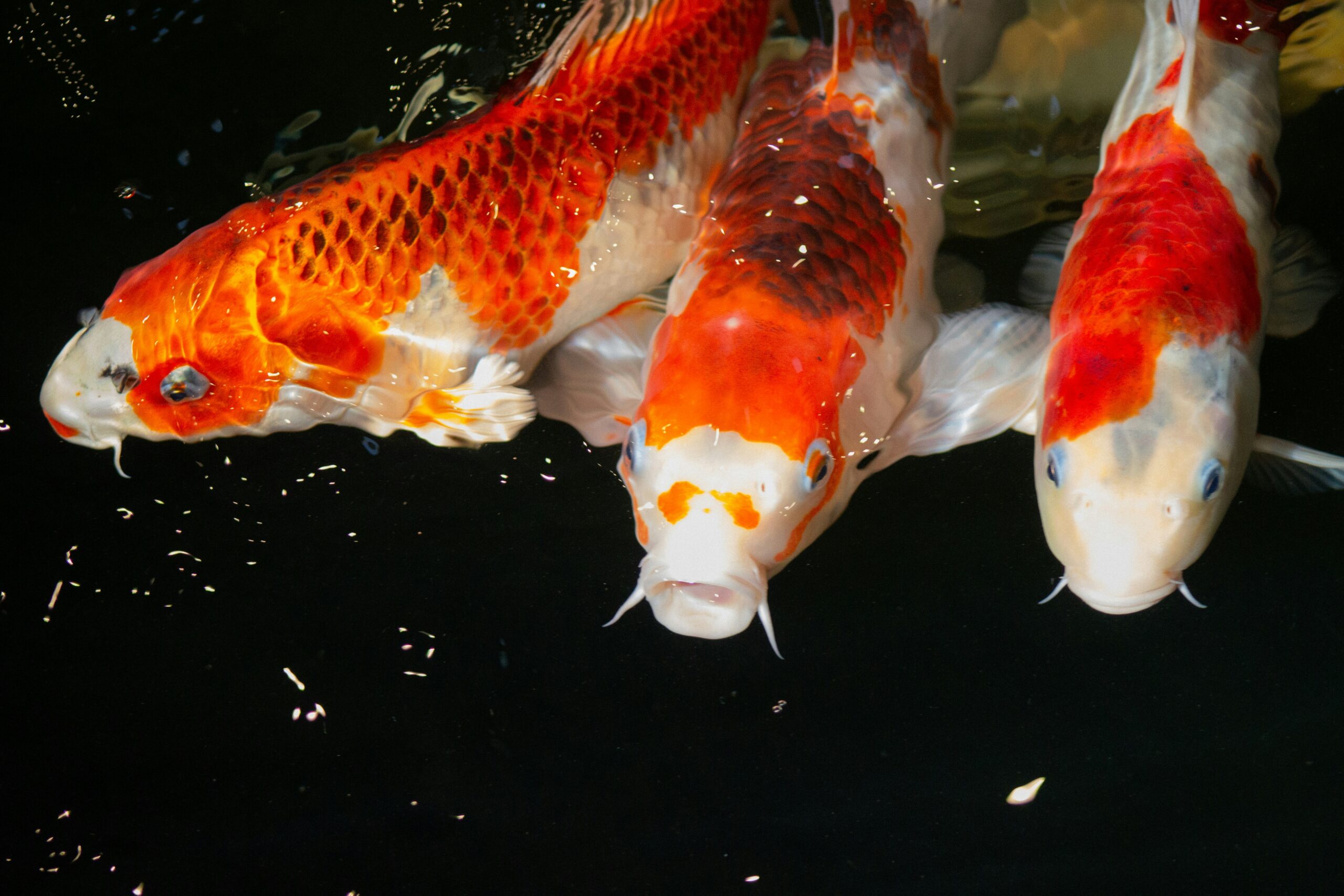
Predicting how a jumbo koi will grow is both an art and a science. Breeders and hobbyists closely study body proportions, early development patterns, and skeletal structure to estimate how large and well-balanced a koi will become in adulthood. Ben Hayt often highlights that early observation is one of the most important factors in successful koi growth forecasting, especially when evaluating frame strength, bone development, and future body volume.
With the right approach, keepers can identify strong genetic potential early and guide growth with careful feeding, stable water conditions, and consistent monitoring. This combination of experience and science helps ensure koi develop into healthy, well-shaped adults over time.
Understanding the Foundation of Growth Potential
Every koi starts with genetic potential that sets the limits for its future size and structure. However, genetics alone does not guarantee results. Instead, caretakers must observe how each fish expresses that potential in the first months of life.
Early indicators such as body thickness, head size, and swimming strength often signal long-term outcomes. For example, koi with naturally broad shoulders tend to develop stronger frames later. Meanwhile, fish with narrow or uneven proportions may require closer monitoring to avoid growth imbalances.
At this stage, breeders also rely on early koi development patterns and genetic koi growth traits to make baseline predictions.
Evaluating Frame Strength in Early Stages
Frame strength determines how well a koi supports its future size. A strong frame allows the fish to grow long and wide without losing balance or structure. Therefore, breeders examine the spine line, head-to-body ratio, and shoulder width very closely.
In addition, they watch how the koi moves through water. Smooth, controlled swimming often signals strong skeletal alignment. On the other hand, irregular movement can hint at weak structural development.
Because of this, professionals focus heavily on koi skeletal structure analysis and frame development indicators during early growth phases.
Bone Development and Its Long-Term Impact
Bone development plays a major role in shaping a jumbo koi. While external features like color and pattern attract attention, internal bone strength determines whether the fish can reach large size safely.
Nutrition, water quality, and temperature all influence bone formation. For instance, calcium balance in the diet helps support proper spinal growth. Meanwhile, stable water conditions reduce stress and allow steady development.
Moreover, koi raised in optimal environments show better alignment and fewer deformities. As a result, breeders prioritize bone density growth in koi and structural health in carp development when planning long-term care strategies.
Predicting Body Volume Through Early Growth Curves
Body volume forecasting helps breeders estimate how large a koi will become in terms of mass and fullness. This involves tracking growth curves over time and comparing them with known benchmarks from successful koi lines.
If a koi gains weight steadily while maintaining proportion, it usually signals strong future volume. However, sudden spikes in growth without frame support can lead to imbalance later.
Therefore, experts carefully monitor feeding response, water temperature, and activity levels. They also use koi growth curve analysis and future body mass prediction to refine their expectations.
Feeding Strategies That Shape Future Size
Diet plays a direct role in how a koi develops over time. High-quality protein supports muscle growth, while balanced mineral intake supports skeletal strength. However, overfeeding can create bloating and reduce structural quality.
Breeders often adjust feeding schedules based on season, temperature, and fish age. During warmer months, koi metabolize food faster, so they require more frequent feeding. In cooler months, growth slows, and feeding must be reduced accordingly.
In addition, professionals rely on koi nutrition planning to support growth and balanced feeding schedules for carp development, maintaining healthy progression.
Environmental Stability and Its Role in Growth Prediction
Water quality and pond conditions significantly influence how accurately breeders can predict growth. Clean, stable environments allow koi to develop without stress, which leads to more predictable outcomes.
Factors such as oxygen levels, filtration efficiency, and temperature stability all contribute to growth consistency. When these conditions fluctuate, koi may experience uneven development, making forecasting less reliable.
Because of this, keepers focus on optimizing the pond environment and managing water quality for koi growth to support stable development patterns.
Using Observation Cycles to Refine Predictions
Growth forecasting is not a one-time task. Instead, it requires continuous observation and adjustment. Breeders regularly measure length, girth, and body condition to track progress.
Over time, these observations help refine predictions about final size and structure. If a koi consistently follows expected growth patterns, confidence in forecasting increases. However, if deviations appear, caretakers adjust feeding or environment strategies.
In addition, experienced breeders use long-term koi growth-tracking and development-monitoring cycles to maintain accurate predictions.
The Role of Experience in Accurate Forecasting
Even with data and tools, experience remains essential. Skilled breeders develop a natural sense for how a koi will grow simply by observing its early behavior and proportions.
They often combine scientific measurements with visual judgment. For example, they can identify whether a fish will develop a thick frame or remain slender based on subtle body cues.
This blend of science and intuition strengthens decision-making. Over time, it improves accuracy in advanced koi forecasting techniques and professional carp development assessment.
Bringing It All Together for Long-Term Success
Growth forecasting in jumbo koi requires patience, consistency, and attention to detail. It is not about predicting exact outcomes but about guiding development in the right direction.
When breeders combine genetics, nutrition, environment, and observation, they create conditions where koi can reach their full potential. As a result, fish develop stronger frames, healthier bone structures, and more balanced body volume.
Ultimately, successful forecasting helps hobbyists and professionals raise koi that are not only large but also structurally sound and visually impressive.