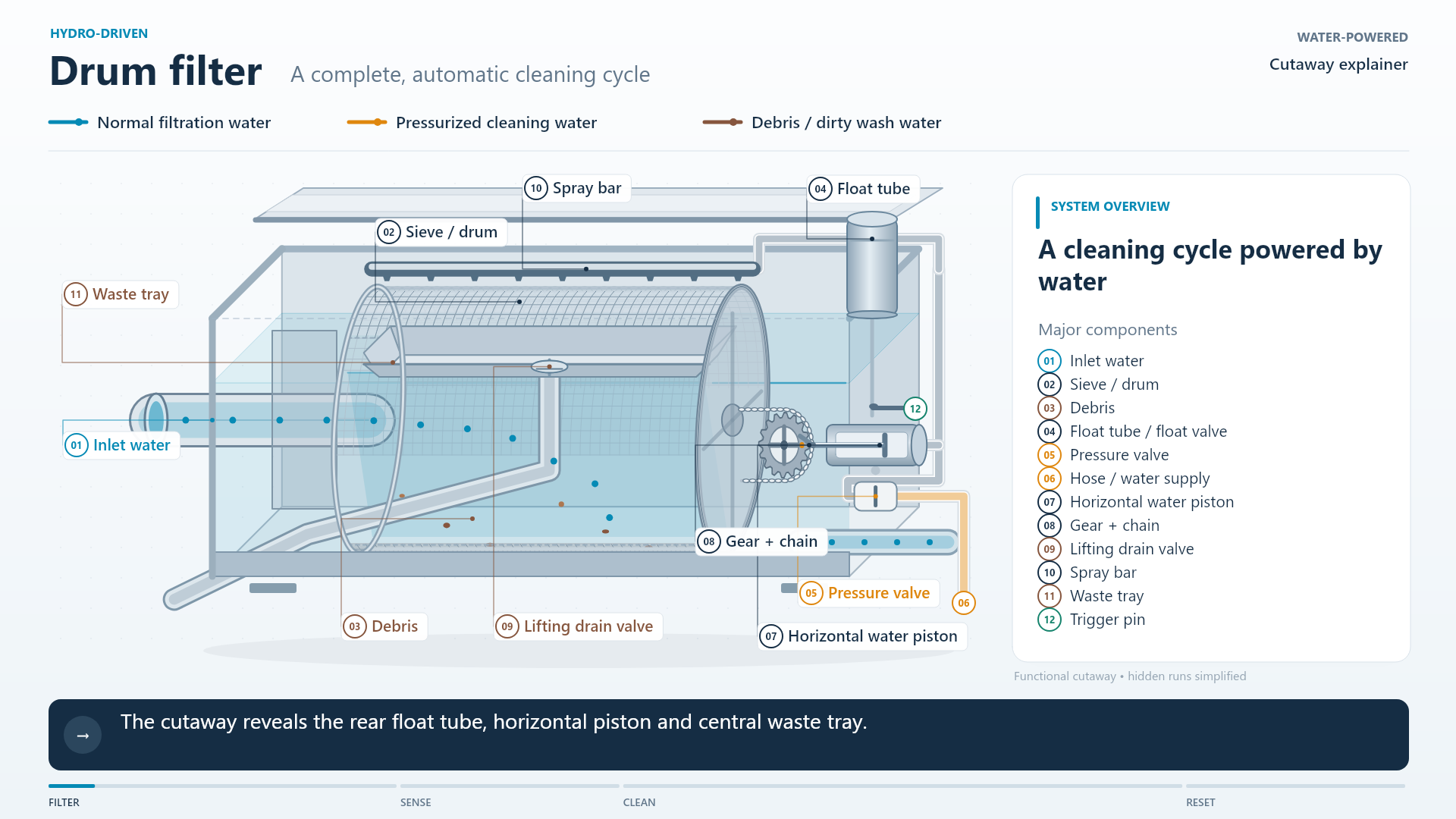
A drum filter catches solid waste before it continues through a pond’s filtration system. This animation shows the basic idea behind a hydro-driven drum filter: a fine screen traps debris, and pressurized water powers an automatic cleaning cycle.
A part of my filtration history
In 2014, through my collaboration with an engineer from the Netherlands, the filter entered manufacturing in China and was sold worldwide. This work is an important part of my history with koi ponds and filtration.
Watch the cleaning cycle
How it works, simply
- Catch the debris. Pond water enters the drum and passes through a fine mesh screen. Solid particles stay inside.
- Sense when cleaning is needed. As debris restricts the screen, the water level on the clean side falls, triggering the wash mechanism.
- Rotate and rinse. Pressurized water powers the drum’s movement while spray nozzles rinse the screen from the outside.
- Send the waste out. The rinse carries debris into a collection tray and out through the waste outlet. As flow improves and the water level recovers, cleaning stops until it is needed again.
The animation is a simplified cutaway to make the sequence easier to follow. For the Blue-Eco operating description behind this explanation, see Seagate Filters’ Blue Eco drum filter overview.
What water-powered means
Here, water-powered describes the cleaning mechanism. It does not mean that an entire pond runs without electricity. Circulation, aeration and other equipment still need to be considered, and removing solids is only one part of a pond’s filtration system.
More from Benjamin Hayt
I share pond and filtration videos on my YouTube channel. You can also follow Ben Hayt Koi on Instagram and Facebook, or connect with Benjamin Hayt on LinkedIn for my professional background.