By Benjamin Hayt
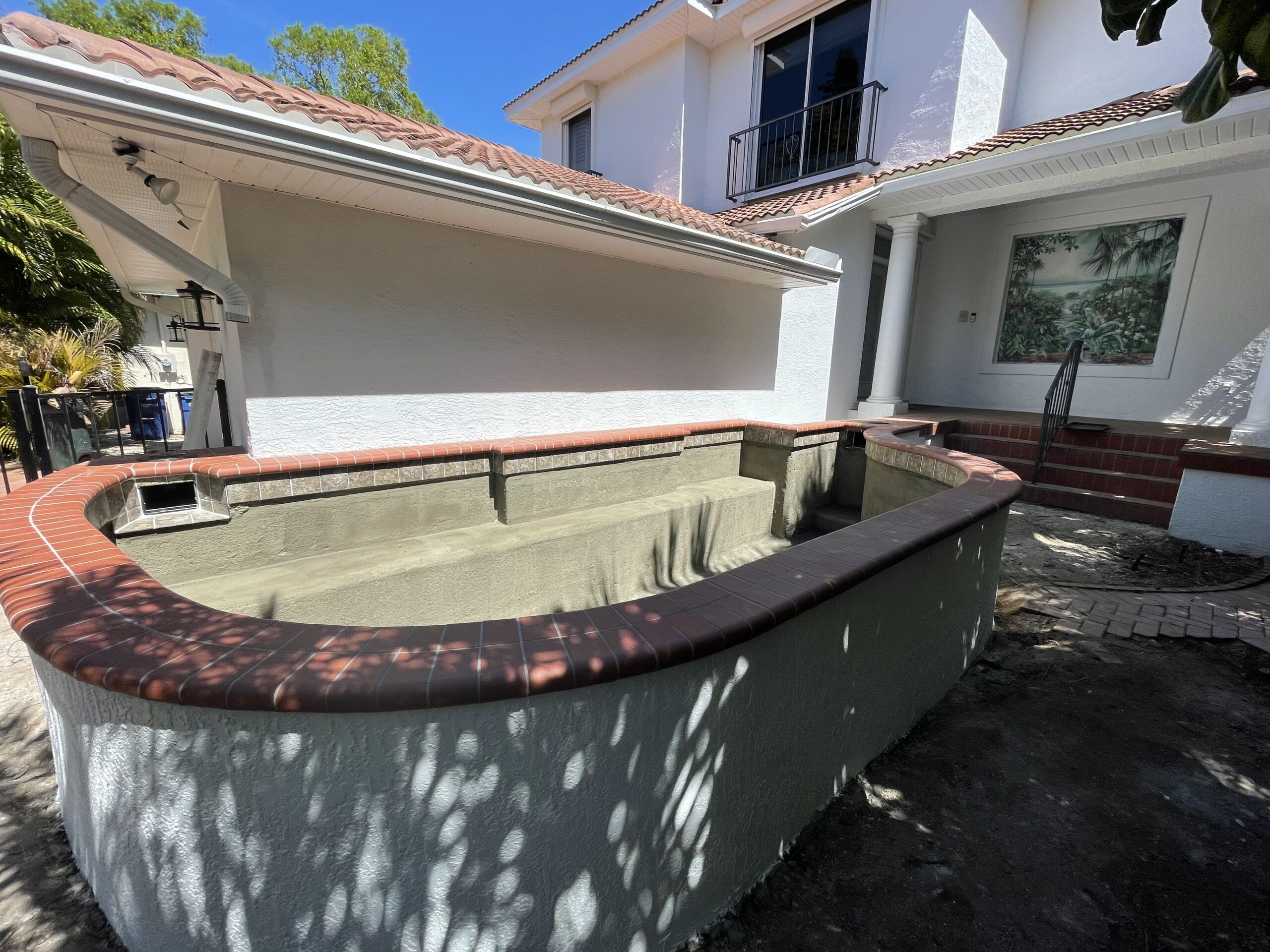
A few years ago, my 3,000-gallon koi pond was still a construction project. Looking back at the build is a useful way to explain what gunite offers—and why the shell material is only one part of a successful pond.
What is gunite?
Gunite is commonly used to describe dry-mix shotcrete: concrete placed by spraying it through a nozzle, where water is added to the dry mixture. It is a placement method, not an alternative to concrete itself. Conventional poured concrete is placed into forms; shotcrete is projected onto a prepared surface. The American Concrete Institute explains the dry- and wet-mix processes.
In the footage from my build, a worker sprays material onto the reinforced pond shell.
Watch the gunite placement footage from my pond build on Instagram.
Curves and the finished surface
One attraction of shotcrete is the freedom to create curved shapes with less of the formwork associated with conventional cast-in-place construction. The American Shotcrete Association describes its use for curved pool shapes.
For a koi pond, I would distinguish the shape of the shell from the surface the fish encounter. Rounded transitions and a smooth, fish-appropriate finish are useful design goals; rough exposed concrete is not the goal. A liner pond or a poured-concrete pond can also be designed with smooth transitions. Gunite alone does not make a pond safer for fish.
Debris management takes more than curves
A rigid shell avoids the folds that can occur with flexible liners, but a curved pond does not clean itself. Water movement, drain placement, the floor layout and routine maintenance all deserve attention. The practical question is where debris settles and how it will be removed.
Leaks and longevity: neither option is automatic
A concrete shell does not have a flexible membrane to puncture. It can still develop cracks or leaks around construction details and plumbing penetrations. Reinforcement, placement, curing and the chosen finish need to work together. ASA’s pool construction guidance qualifies watertightness in terms of properly placed, good-quality, uncracked shotcrete.
A well-installed pond liner is also a valid construction choice. Its performance depends on preparation and installation: a suitable substrate, protective underlay where required, and careful seams and fittings. The Elevate PondGard installation guide details those requirements. It would be misleading to say that all liners leak early or that every concrete pond lasts longer.
What I take from this build
The material choice should support the whole pond design, including its shape, finish, plumbing and access for maintenance. For my pond, the construction footage shows how a curved, rigid shell took shape. It does not establish that the same method is the best choice for every site or budget.
Once a pond is running, regular observations help document changes. I share a free koi observation journal and worksheet for recording feeding, water checks and maintenance.